How to Play Guitar: Complete Beginner's Guide
15 min read · Beginner · Updated February 2026
Learning guitar is one of the most rewarding things you can do. Whether you want to strum along to your favorite songs, write your own music, or eventually shred solos — it all starts here. This guide will take you from never having touched a guitar to playing your first chords and songs.
Choosing Your First Guitar
The best guitar for a beginner is the one you'll actually pick up and play. That said, here are some practical guidelines:
Acoustic guitar is the most popular choice for beginners. It requires no amplifier, you can play it anywhere, and it builds finger strength quickly. Steel-string acoustics are standard for pop, rock, country, and folk. Classical (nylon-string) guitars have a wider neck and softer strings, which some beginners find more comfortable.
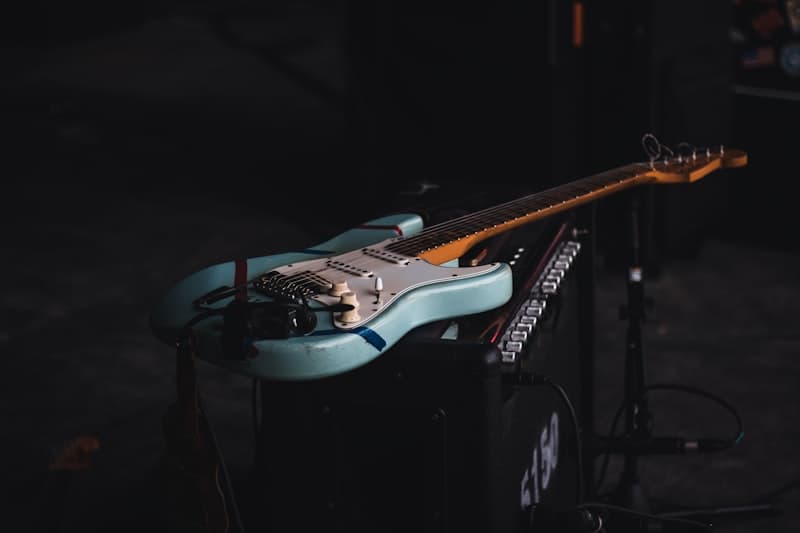
Electric guitar is a great choice if you're drawn to rock, blues, metal, or jazz. The strings are thinner and closer to the fretboard, making them physically easier to press. You'll need an amplifier, though many affordable practice amps (or even headphone amps) work perfectly for learning.
Don't overthink it. A $150-200 guitar from a reputable brand will serve you well for your first year or more. Brands like Yamaha, Fender, Epiphone, and Squier all make solid beginner instruments.
Parts of the Guitar
Before you start playing, familiarize yourself with the basic parts of the guitar:
- Headstock — The top of the guitar where the tuning pegs live
- Tuning pegs (machine heads) — Turn these to tighten or loosen each string to change its pitch
- Nut — The small grooved piece where the headstock meets the neck, guiding the strings
- Neck — The long piece you wrap your hand around
- Fretboard (fingerboard) — The flat surface on the front of the neck where you press the strings
- Frets — The metal strips embedded in the fretboard. Pressing a string behind a fret changes the note
- Body — The large section that produces or amplifies sound
- Sound hole — The round opening on an acoustic guitar's body
- Bridge — Anchors the strings to the body at the bottom
How to Hold the Guitar
Proper posture makes everything easier — from chord shapes to strumming to avoiding injury.
Sitting position: Sit in a chair without arms. Rest the guitar body on your right thigh (if you're right-handed). The neck should angle slightly upward — not parallel to the floor. Keep your back relatively straight. The guitar should feel stable without you needing to hold it up with your fretting hand.
Fretting hand (left hand): Your thumb should rest on the back of the neck, roughly behind your middle finger. Curl your fingers so you're pressing strings with your fingertips, not the flat pads. Keep your wrist relatively straight — avoid bending it at extreme angles.
Strumming hand (right hand): Your forearm should rest lightly on the top edge of the guitar body. Your hand should float over the sound hole. Stay relaxed — tension is the enemy of good strumming.
Tuning Your Guitar
A guitar has six strings. From thickest (lowest pitch) to thinnest (highest pitch), the standard tuning is:
- 6th string (thickest) — E
- 5th string — A
- 4th string — D
- 3rd string — G
- 2nd string — B
- 1st string (thinnest) — E
A popular mnemonic: Eddie Ate Dynamite, Good Bye Eddie.
Use a clip-on tuner (around $10-15) or a free tuning app on your phone. Clip-on tuners are more reliable in noisy environments. Pluck each string individually and adjust the tuning peg until the tuner shows the correct note and the indicator is centered.
Tune every time you play. Seriously. Playing an out-of-tune guitar trains your ear to accept wrong notes, and nothing will sound right no matter how good your technique is.
Your First Chords
Chords are the foundation of guitar playing. A chord is simply multiple notes played together. We'll start with two of the easiest and most useful chords: Em and G.
Em (E Minor)
This is often the very first chord beginners learn because it only requires two fingers:
- Place your middle finger on the 2nd fret of the A string (5th string)
- Place your ring finger on the 2nd fret of the D string (4th string)
- Strum all six strings
That's it — you're playing a chord! Em has a moody, slightly melancholic sound. It appears in thousands of songs across every genre.
G Major
G is one of the most common chords in popular music:
- Middle finger on the 3rd fret of the low E string (6th string)
- Index finger on the 2nd fret of the A string (5th string)
- Ring finger on the 3rd fret of the high E string (1st string)
- Strum all six strings
G major sounds bright, open, and full. Combined with Em, you can already play the chord progression for songs like “Wish You Were Here” by Pink Floyd (which alternates between Em and G).
For a complete guide to essential beginner chords, check out our Easy Guitar Chords lesson.
Real Rhythm Guitar Level 1
Want a structured approach to rhythm guitar? This course builds your strumming, timing, and chord transitions from the ground up.
Basic Strumming
Strumming is how you bring chords to life. Here's how to develop a solid strumming technique:
Use a pick (plectrum): Hold it between your thumb and the side of your index finger. Only a small amount of the pick should stick out. Hold it firmly enough that it doesn't fly away, but loosely enough that it flexes slightly when hitting the strings.
The basic down strum: Drag the pick across the strings from the thickest string to the thinnest in a smooth, even motion. Use your wrist, not your whole arm. Think of it like shaking water off your hand.
Adding up strums: After a down strum, bring the pick back up across the strings from thin to thick. The up strum is usually lighter and catches fewer strings — that's normal and sounds good.
Your first strumming pattern: Try this simple pattern: Down, Down, Down-Up, Down-Up. Count it as: 1, 2, 3-and, 4-and. Repeat this on a single chord until it feels natural, then try switching between Em and G every four beats.
Reading Chord Diagrams
Chord diagrams are visual maps showing you where to put your fingers. Here's how to read them:
- The vertical lines represent the six strings (left = thickest, right = thinnest)
- The horizontal lines represent frets
- Dots show where to place your fingers
- Numbers inside dots indicate which finger to use (1 = index, 2 = middle, 3 = ring, 4 = pinky)
- An “O” above a string means play it open (don't press any fret)
- An “X” above a string means don't play that string
You'll see chord diagrams everywhere — in songbooks, on websites, and in apps. Once you can read them, you can learn any chord instantly.
Your First Practice Routine
Consistent practice beats marathon sessions. Here's a 20-minute daily routine for your first two weeks:
- Minutes 1-3: Tune your guitar
- Minutes 3-8: Practice forming Em and G chords. Press the chord, strum once, check that every string rings clearly, adjust if needed
- Minutes 8-13: Practice switching between Em and G. Start slow — don't worry about speed. Focus on smooth, clean transitions
- Minutes 13-18: Strum a simple pattern (Down, Down, Down-Up, Down-Up) while switching chords every four beats
- Minutes 18-20: Play something fun — try strumming along to a song you like that uses these chords
Key tips:
- Your fingertips will hurt at first. This is completely normal. Calluses develop within 2-3 weeks of regular playing
- If something buzzes, check that you're pressing close to the fret (not on top of it) and using your fingertip
- Slow is smooth, smooth is fast. Never sacrifice clean technique for speed
- 20 minutes daily is better than 2 hours once a week
Common Beginner Mistakes
Avoid these pitfalls that slow down most beginners:
- Not tuning before playing — Always tune. Every single time
- Pressing too hard — You only need enough pressure for the string to ring clearly. Excess pressure causes hand fatigue and slows you down
- Neglecting rhythm — Many beginners obsess over chords but ignore timing. Rhythm is what makes music sound like music. Use a metronome app
- Trying to learn too many things at once — Master two chords before adding a third. Depth beats breadth at this stage
- Comparing yourself to others — Every guitarist was a beginner once. Focus on your own progress
Next Steps
Once you're comfortable with Em and G, here's your roadmap:
- Learn C, D, and Am chords — see our Easy Guitar Chords lesson
- Start learning to read guitar tabs so you can learn songs
- Explore more strumming patterns to add variety
- Try playing along with recordings of simple songs
The most important thing is to keep playing. Every guitarist remembers the struggle of the first few weeks — and every guitarist will tell you it's worth pushing through. The moment you play a song and it actually sounds like music is one of the most satisfying feelings in the world.
Real Rhythm Guitar Level 1
Ready for a complete, structured course? Real Rhythm Guitar Level 1 takes you from beginner to confident rhythm player with professional instruction and practice tracks.
Keep practicing, stay patient, and enjoy the journey. You're already a guitarist — now it's just a matter of getting better every day.